
Weight loss during GLP-1-based treatment can include reductions in both fat mass and lean mass. Research involving semaglutide and tirzepatide shows that fat generally accounts for the larger share of weight lost, but lean tissue can also decrease.
That does not mean every decrease in lean mass represents medication-caused muscle loss. Lean mass is broader than skeletal muscle, and meaningful weight loss itself can affect both fat and non-fat tissue.
A better measure of successful weight loss is not simply how many pounds are lost. It is whether excess fat decreases while strength, function and healthy lean tissue are supported.
For patients considering GLP-1 weight loss in Sarasota, body composition is therefore worth considering alongside changes on the scale.
TL;DR: Can You Lose Muscle While Taking a GLP-1?
Yes. Weight loss during GLP-1 treatment can include some loss of lean mass.
Key points:
- Weight loss can include both fat and lean tissue.
- Lean mass is not identical to skeletal muscle.
- Semaglutide and tirzepatide studies show substantially greater reductions in fat mass than lean mass.
- Scale weight alone cannot show how much fat, muscle or other lean tissue has changed.
- Strength, physical function, nutrition and activity also matter.
- Body-composition changes should be interpreted in the context of overall health and treatment response.
The key question is not simply “Did lean mass decrease?”
It is whether body composition improved overall and whether strength, mobility and physical function are being maintained.
What Does “Muscle Loss” Mean in GLP-1 Research?
GLP-1-associated weight loss can include a reduction in lean mass, but current research does not support treating every decrease in lean mass as direct medication-caused muscle loss.
Many clinical studies use DXA scans to measure lean body mass rather than directly measuring skeletal muscle.
What Is Lean Mass?
Lean mass refers broadly to body tissue that is not fat.
Depending on the measurement method, it can include:
- Skeletal muscle
- Body water
- Organs
- Connective tissue
- Other non-fat tissues
This distinction is important when interpreting research.
A decrease in DXA-measured lean mass does not automatically mean the same amount of skeletal muscle was lost.
The medical journal Obesity Reviews has emphasized the importance of distinguishing these body compartments when evaluating incretin-based weight-loss treatment. Its review notes the need to “monitor and minimize loss of muscle mass and function” as part of comprehensive obesity treatment.
Review the Obesity Reviews analysis on muscle preservation during incretin-based obesity treatment.
What Does Research Show About Semaglutide and Lean Mass?
Semaglutide research shows that significant weight loss can include reductions in both fat mass and lean body mass.
An exploratory analysis of the STEP 1 trial evaluated body composition using DXA scans in adults with overweight or obesity.
What Did the STEP 1 Analysis Find?
In the STEP 1 DXA subgroup, participants receiving semaglutide 2.4 mg experienced an average:
- 15.0% reduction in body weight
- 19.3% reduction in total fat mass
- 9.7% reduction in total lean body mass
Although total lean body mass decreased, fat mass decreased more substantially. As a result, the proportion of body weight represented by lean mass increased and the lean-mass-to-fat-mass ratio improved.
The Journal of the Endocrine Society reported that “total lean body mass decreased from baseline” while overall body composition improved.
Read the STEP 1 body-composition analysis in the Journal of the Endocrine Society.
Does This Mean Semaglutide Directly Causes Muscle Loss?
The STEP 1 analysis does not establish that semaglutide directly causes skeletal muscle loss.
It shows that significant weight loss during semaglutide treatment included decreases in measured lean body mass as well as larger decreases in fat mass.
That distinction matters because weight loss from many approaches can include some reduction in lean tissue.
Patients looking for information about eligibility, treatment, monitoring and Sarasota availability can review semaglutide weight loss in Sarasota.
What Does Research Show About Tirzepatide and Lean Mass?
Tirzepatide has also been studied using DXA body-composition measurements.
A SURMOUNT-1 substudy evaluated 160 participants with baseline and week-72 DXA data.
What Did the SURMOUNT-1 Substudy Find?
Participants receiving tirzepatide experienced an average:
- 21.3% reduction in body weight
- 33.9% reduction in fat mass
- 10.9% reduction in lean mass
Researchers estimated that approximately three-quarters of the weight lost came from fat mass and one-quarter from lean mass.
Published in Diabetes, Obesity and Metabolism, the study reported that “approximately 75% was fat mass and 25% was lean mass.”
Read the SURMOUNT-1 body-composition study in Diabetes, Obesity and Metabolism.
Does Everyone Taking Tirzepatide Lose the Same Amount of Lean Mass?
No.
Those figures are averages from a specific clinical-trial substudy. Individual changes in body composition can vary based on age, starting body composition, activity, nutrition, amount of weight lost and other health factors.
The findings should not be used to predict how much lean mass one patient will lose.
Patients interested in treatment eligibility and provider-guided care can review tirzepatide weight loss in Sarasota.
Is Lean-Mass Loss Caused by GLP-1 Medication or Weight Loss Itself?
Lean-mass reduction can occur during weight loss itself. It is not unique to GLP-1 treatment.
When total body weight falls substantially, some of that change may come from lean tissue in addition to body fat.
Why Is the Difference Important?
It is easy to assume that a change in lean mass is caused directly by the medication.
The relationship is more nuanced.
GLP-1 treatment can lead to substantial weight loss, and substantial weight loss can include changes in both fat and lean tissue.
Researchers continue to study how medication type, rate of weight loss, nutrition, activity, age and baseline health affect those changes.
Current evidence supports paying attention to body composition without assuming that every reduction in lean mass represents direct medication-related muscle damage.
Why Does Preserving Muscle Matter During Weight Loss?
Muscle supports strength, mobility and physical function. Those outcomes matter even when body weight is moving in the desired direction.
A lower number on the scale should not be the only measure of progress.
Muscle Supports Physical Function
Skeletal muscle contributes to everyday activities such as:
- Walking
- Climbing stairs
- Lifting
- Balance
- Exercise
- Maintaining mobility
A successful weight-management plan should support the ability to stay active and function well.
Body Composition Provides More Context Than Weight Alone
Two people can weigh exactly the same amount while having very different proportions of body fat and lean tissue.
That is why total weight tells only part of the story.
Reducing excess fat while maintaining more healthy lean tissue may represent a more favorable body-composition change than focusing on total pounds alone.
Muscle Becomes More Important With Age
Age is associated with gradual changes in muscle mass, strength and physical performance.
For older adults or people who already have limited strength or mobility, preserving muscle during substantial weight loss may deserve closer attention.
Who May Need More Attention to Lean-Mass Changes?
Patients do not begin weight-loss treatment with the same body composition, nutritional status or physical capacity.
Some may need closer attention to muscle health during significant weight reduction.
Factors a provider may consider include:
- Age
- Baseline strength
- Physical activity
- Amount and rate of weight loss
- Overall food intake
- Protein intake
- Mobility limitations
- Chronic medical conditions
- Previous loss of muscle or strength
- Changes in physical function during treatment
These factors do not automatically predict muscle loss. They provide context for deciding what should be monitored.
How Can Muscle and Body Composition Be Monitored?
Scale weight can show whether total body weight is changing, but it cannot identify what type of tissue was lost.
A more complete assessment may consider body composition, strength, function and nutritional status together.
Can Body Composition Be Measured?
Depending on the clinical setting, body composition may be estimated using methods such as:
- DXA
- Bioelectrical impedance
- Other validated body-composition tools
Each method has limitations.
DXA-measured lean mass, for example, should not automatically be interpreted as a direct measurement of skeletal muscle.
Why Should Strength and Function Be Considered?
Muscle health involves more than muscle quantity.
Changes in:
- Strength
- Mobility
- Exercise tolerance
- Balance
- Ability to perform daily activities
can provide useful information about physical function.
A favorable body-composition number means more when strength and mobility are also being preserved.
Is the Scale Still Useful?
Yes.
Weight trends remain important during medical weight loss. The goal is not to stop using the scale but to avoid treating it as the only measure of treatment quality.
This broader perspective is especially relevant in provider-guided medical weight loss in Sarasota, where weight trends can be considered alongside health history, treatment response and long-term goals.
What Can Support Muscle During GLP-1 Weight Loss?
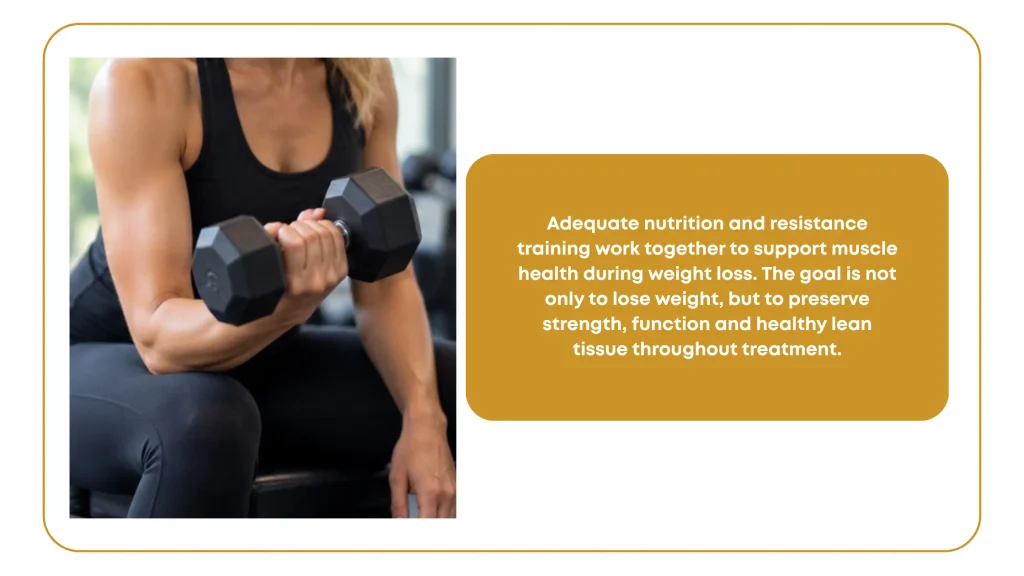
Adequate nutrition and resistance-based activity can help support lean tissue and strength during weight loss.
The right approach depends on the patient’s health, activity level, nutritional needs and physical limitations.
Why Does Nutrition Matter?
Reduced appetite can make it harder for some patients to consume enough food or meet nutritional needs.
Protein is particularly relevant to maintaining lean tissue, but there is no single intake target appropriate for every patient.
For a broader discussion, see SOTA Wellness’s guide to nutrition during medical weight loss.
Why Does Resistance Training Matter?
Resistance-based exercise provides a stimulus for maintaining muscle strength and function during weight loss.
The Obesity Reviews analysis on incretin-based treatment emphasizes physical activity and resistance exercise as part of a strategy to address muscle loss during substantial weight reduction.
For practical guidance, read more about exercise during medical weight loss.
Should You Worry About Muscle Loss on a GLP-1?
Lean-mass changes deserve attention, but they should be interpreted as part of the overall treatment response.
Studies of both semaglutide and tirzepatide show significant fat loss alongside some reduction in measured lean mass. In both cases, fat mass decreased more substantially.
The goal should therefore be quality weight loss, not simply the fastest possible drop on the scale.
That means considering:
- Fat reduction
- Lean-mass preservation
- Strength
- Mobility
- Nutrition
- Treatment tolerance
- Long-term health
Body composition gives useful context, but strength and physical function remain important indicators of whether healthy tissue is being supported.
When Should You Talk With Your Provider?
Talk with your provider if you notice meaningful changes in strength, energy, food intake, mobility or physical function during GLP-1 treatment.
A clinical review may also be appropriate if weight is changing rapidly or reduced appetite makes adequate nutrition difficult.
Questions worth asking include:
- Am I losing weight at an appropriate rate?
- Is my current food intake adequate?
- Should we review my protein intake?
- Is resistance exercise appropriate for me?
- Would tracking body composition be useful?
- How can we monitor strength and physical function?
- Do weakness or major changes in energy need further evaluation?
Do not change the dose, schedule or use of a prescription GLP-1 medication without discussing it with the healthcare professional managing your treatment.
Frequently Asked Questions
Do GLP-1 Medications Make You Lose Muscle?
Weight loss during GLP-1 treatment can include reductions in lean mass as well as fat mass. However, lean mass is not identical to skeletal muscle, and studies generally show that fat accounts for the larger share of weight lost.
Is Lean Mass the Same as Muscle?
No. Lean mass can include skeletal muscle, body water, organs and other non-fat tissues. A measured reduction in lean mass should therefore not automatically be interpreted as the same amount of skeletal muscle loss.
Does Semaglutide Cause Muscle Loss?
Research from the STEP 1 body-composition analysis found reductions in both fat mass and lean body mass during semaglutide treatment. Fat mass declined more substantially, and the lean-mass-to-fat-mass ratio improved.
Does Tirzepatide Cause Muscle Loss?
The SURMOUNT-1 body-composition substudy found decreases in both fat mass and lean mass during tirzepatide-associated weight loss. About 75% of weight lost was fat mass and 25% was lean mass on average.
Can Protein Help Preserve Muscle During Weight Loss?
Adequate protein can support lean tissue during weight loss, but individual needs vary according to age, health, activity and other factors. There is no universal protein target appropriate for every patient taking a GLP-1 medication.
Should You Strength Train While Taking a GLP-1?
Resistance-based activity can help support muscle strength during weight loss when medically appropriate. Exercise recommendations should be individualized based on health, experience and physical limitations.
Is Losing Lean Mass During Weight Loss Always Bad?
Not necessarily. Some lean-mass reduction can accompany substantial weight loss. The amount of fat lost, overall body-composition change, strength, mobility and physical function should also be considered.
Focus on the Quality of Weight Loss
GLP-1 medications can support meaningful weight reduction for eligible patients, but the number on the scale is only one part of progress.
Healthy medical weight loss should also consider body composition, nutrition, strength, mobility, treatment tolerance and long-term health.
At SOTA Wellness, weight-management care is provider-guided and individualized around each patient’s health history, response and goals.
If you are using semaglutide, tirzepatide or another weight-management medication and want to understand how your plan supports healthy, sustainable weight loss, schedule a consultation with SOTA Wellness.
This article is for educational purposes only and does not replace individualized medical advice, diagnosis or treatment.